Small roof junctions can create disproportionately large leaks.
A detailed demonstration page for chimney details, flashings, abutments and other vulnerable roof junctions.
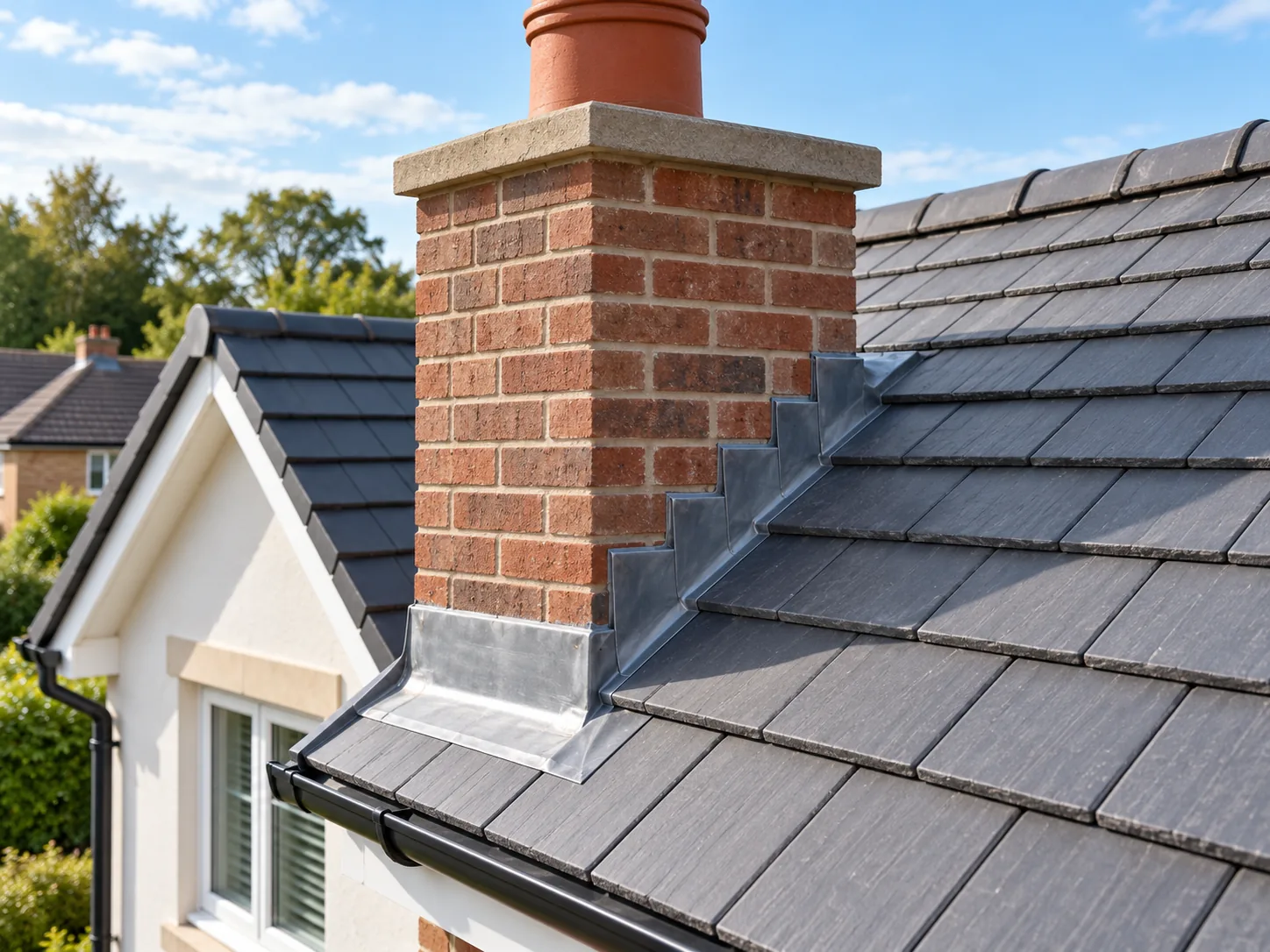
AI-generated demonstration image. It is not presented as a completed customer project.
Chimneys and leadwork need the junction, not just the symptom, to be checked.
Water ingress around a chimney or abutment can come from several nearby details: flashings, soakers, pointing, the chimney surface itself or the surrounding roof covering. Treating one visible crack without confirming the water path can leave the underlying problem unresolved.
Remedial work can involve repairing or renewing leadwork, correcting an abutment or junction detail, addressing local masonry defects or coordinating roof-covering repairs around the chimney. Safe access is often a significant part of the job.
Typical project considerations
- Location of dampness relative to the chimney or junction
- Condition of flashings, soakers and abutments
- Visible masonry, pointing or flaunching defects
- Condition of surrounding tiles or slates
- Working height, roof access and scaffolding requirements
What the work may involve
A simple enquiry process
- Describe where the dampness or visible defect appears.
- Add photos of the chimney, junction and surrounding roof if safely obtainable.
- Review access and inspect the detail closely where necessary.
- Confirm which components require repair before agreeing the final scope.
Seeing dampness around a chimney, wall junction or flashing?
Share the project details and optional photos first. A callback, further questions or a site visit may still be required before any final quotation.